The World Cup 2026 Watchability Report
Who’s watching at prime time, who’s setting a 3 AM alarm, and who might want to invest in a good coffee machine
The 2026 World Cup is the biggest ever — 48 teams, 104 matches, spread across three countries and four time zones. We ran the numbers on every kickoff time, converted them to each team’s capital city, and asked a simple question: can your fans actually watch you play?
For some nations, the answer is a comfortable yes. For others, the answer involves a very good relationship with their alarm clock. And for the world’s biggest coffee brands, it’s a marketing opportunity on a global scale.
Which World Cup 2026 teams have the worst kickoff times for their fans?
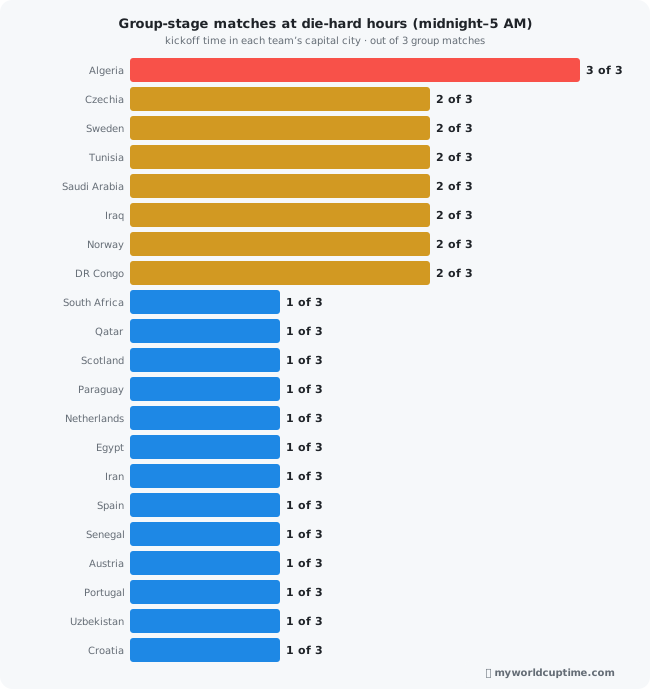
Algeria has the worst World Cup 2026 schedule of any qualified team. All three of their group-stage matches kick off between 2 AM and 4 AM in Algiers — the only nation with zero matches at a watchable hour. Norway, Czechia, Iraq, Saudi Arabia, and Tunisia round out the bottom of the list, each with at least two of three group games starting after midnight in their capital city.
Every team plays three group-stage matches. We converted each kickoff to the team’s own capital city timezone and counted how many fall in die-hard hours (midnight to 5 AM).
| Team | Capital | Die-hard matches |
|---|---|---|
| Algeria | Algiers | 3 of 3 |
| Czechia | Prague | 2 of 3 |
| Sweden | Stockholm | 2 of 3 |
| Tunisia | Tunis | 2 of 3 |
| Saudi Arabia | Riyadh | 2 of 3 |
| Iraq | Baghdad | 2 of 3 |
| Norway | Oslo | 2 of 3 |
| DR Congo | Kinshasa | 2 of 3 |
| South Africa | Pretoria | 1 of 3 |
| Qatar | Doha | 1 of 3 |
| Scotland | Edinburgh | 1 of 3 |
| Paraguay | Asuncion | 1 of 3 |
| Netherlands | Amsterdam | 1 of 3 |
| Egypt | Cairo | 1 of 3 |
| Iran | Tehran | 1 of 3 |
| Spain | Madrid | 1 of 3 |
| Senegal | Dakar | 1 of 3 |
| Austria | Vienna | 1 of 3 |
| Portugal | Lisbon | 1 of 3 |
| Uzbekistan | Tashkent | 1 of 3 |
| Croatia | Zagreb | 1 of 3 |
The luckiest fans among the 48
If you’re a fan of Mexico, Ecuador, Panama, Canada, or the USA, every single group match falls in afternoon or evening hours in your capital. New Zealand, thanks to the timezone flip, get all three in the afternoon. The host nations were always going to have the best deal, but the South American and Caribbean teams benefit almost as much — Brazil, Haiti, Colombia, and Paraguay all have zero die-hard matches.
The hardest-hit regions
North African and Middle Eastern teams take the biggest hit. Algeria’s three-alarm-clock schedule is the worst, but Saudi Arabia (two die-hard games), Tunisia (two), and Iraq (effectively three overnight matches) all suffer. European teams are a mixed bag: Scandinavia gets punished (Norway and Sweden each have two overnight games), while southern European nations like Spain and Portugal largely escape with evening kickoffs.
Scotland’s fans have waited since 1998 and their opener against Haiti kicks off at 2 AM in Edinburgh. Steve Clarke’s side play their second match against Morocco at midnight. For a nation that produced the world’s most famous whisky, at least there’s something to sip while watching.
DR Congo, at their first World Cup in 52 years, have two games that start after midnight in Kinshasa. Uzbekistan’s World Cup debut includes a 4 AM kickoff in Tashkent. Even the debutants can’t catch a break.
Which fan regions face the most overnight World Cup 2026 knockout matches?
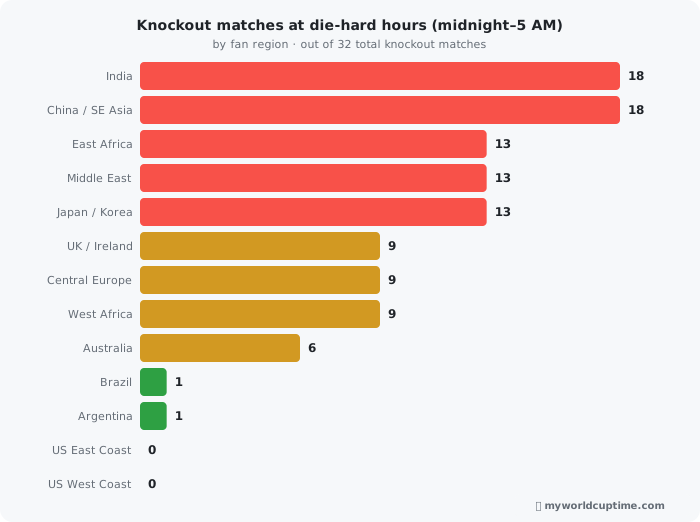
India and China each have 18 of 32 knockout matches kicking off between midnight and 5 AM — and zero in evening hours. The entire knockout stage falls in morning or die-hard time across India, China, South-East Asia, Japan, South Korea, and Australia. The US East Coast, by contrast, gets 27 of 32 knockouts in afternoon or evening.
The group stage is one thing — you set three alarms and deal with it. But the knockout rounds are 32 matches over three weeks, and that’s where the schedule gets truly unforgiving for certain parts of the world.
| Fan region | Overnight knockout matches |
|---|---|
| India | 18 of 32 |
| China / SE Asia | 18 of 32 |
| East Africa | 13 of 32 |
| Middle East | 13 of 32 |
| Japan / Korea | 13 of 32 |
| UK / Ireland | 9 of 32 |
| Central Europe | 9 of 32 |
| West Africa | 9 of 32 |
| Australia | 6 of 32 |
| Brazil | 1 of 32 |
| Argentina | 1 of 32 |
| US East Coast | 0 of 32 |
| US West Coast | 0 of 32 |
The coffee sponsorship opportunity
If you’re a global coffee brand, here’s your target demographic: fans across India, China, Japan, South Korea, and Australia watching the knockout stages. That’s a combined population north of 3 billion people, and not a single knockout match falls in evening viewing hours for any of them.
The entire knockout stage — Round of 32, Round of 16, quarter-finals, semi-finals, and the final — is either a morning marathon or a middle-of-the-night commitment. Japan gets 13 die-hard matches out of 32. India gets 18. The brands that figure out how to sponsor those 3 AM viewing sessions will clean up.
South Korea’s Son Heung-min plays his club football for LAFC in Los Angeles, so at least he’ll be well-rested. His fans back in Seoul, waking up at 4 AM to watch him, won’t be.
The Final: Who’s awake on July 19?
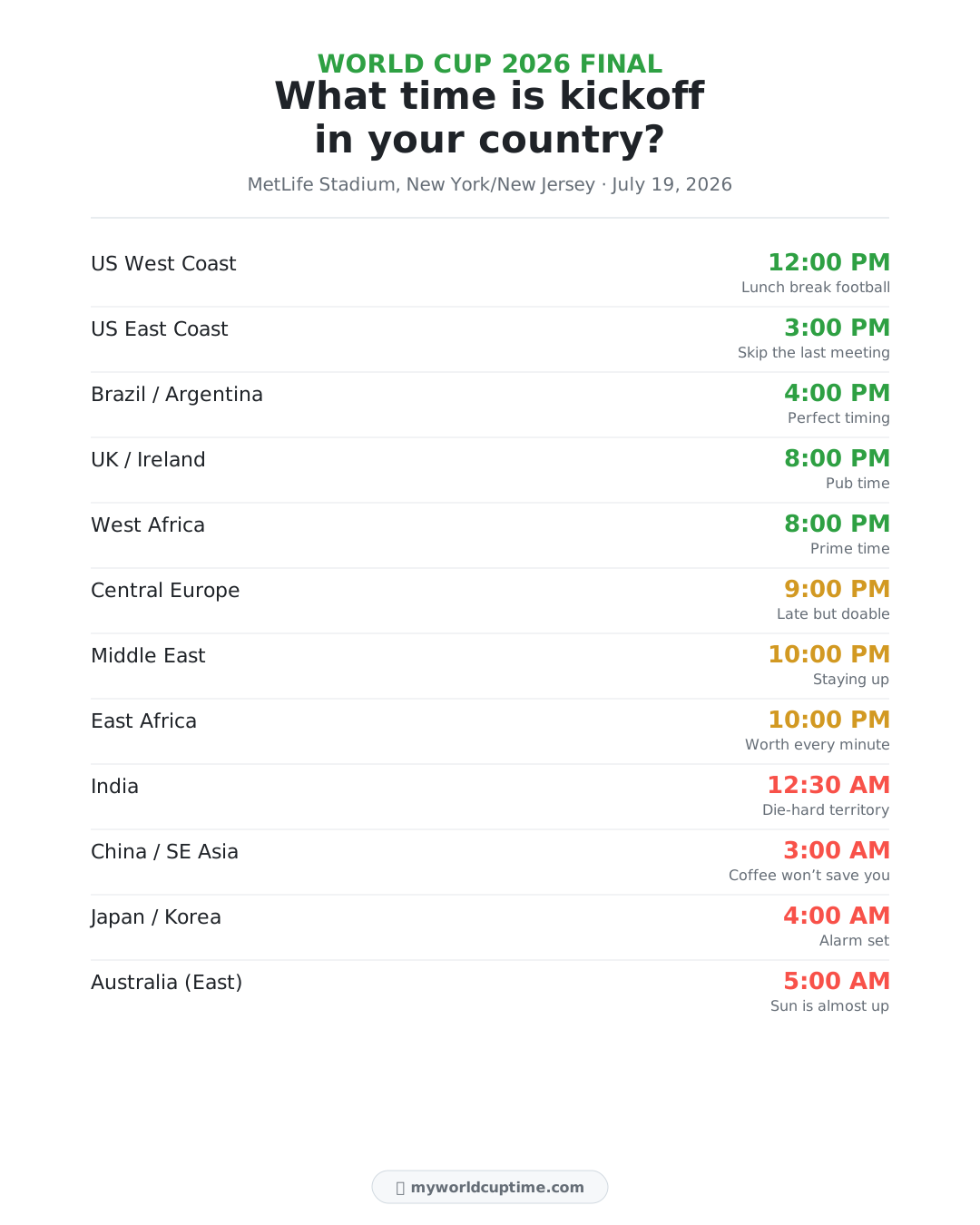
The biggest single match in football kicks off at MetLife Stadium at 3:00 PM Eastern. Here’s what that translates to for fans around the world:
How we calculated the World Cup 2026 watchability scores
We converted all 104 match kickoff times (UTC) to local time in each team’s capital city and in 13 major fan regions worldwide. Time-of-day buckets: morning (5 AM–noon), afternoon (noon–5 PM), evening (5 PM–9 PM), night (9 PM–midnight), die-hard (midnight–5 AM). The main schedule page lets you check every match against your personal timezone and availability — pick your city, set the hours you’re free, and see which matches fit your life.
All kickoff times sourced from the official 2026 World Cup match schedule published in December 2025 and reconfirmed in March 2026. Local times converted using IANA timezone data. This report was last verified on October 2, 2026.
Frequently asked questions
Which country has the worst World Cup 2026 schedule?
Algeria. All three of their group matches — against Argentina, Jordan, and Austria — kick off between 2 AM and 4 AM in Algiers. Not a single game at a watchable hour.
What time is the World Cup 2026 final in my timezone?
The final kicks off at MetLife Stadium on July 19, 2026 at 3:00 PM Eastern Time. That’s 12:00 PM US West Coast, 4:00 PM in Brazil and Argentina, 8:00 PM in the UK and West Africa, 9:00 PM in Central Europe, 10:00 PM in the Middle East and East Africa, 12:30 AM in India, 3:00 AM in China and South-East Asia, 4:00 AM in Japan and Korea, and 5:00 AM on the Australian east coast.
How many World Cup 2026 knockout matches are overnight for India?
18 of the 32 knockout matches kick off between midnight and 5 AM in India. Zero knockout matches fall in evening hours. The same is true for fans in China and across South-East Asia — the entire knockout stage is a morning or die-hard affair.
Which fans get the best World Cup 2026 schedule?
Fans on the US East Coast: 27 of 32 knockout matches fall in afternoon or evening hours. The host nations — USA, Canada, and Mexico — along with Brazil, Argentina, and most of South America have zero overnight matches.
The Final: shareable graphic
Save this and share it with your group chat. What time is the World Cup Final in your country?
Download for Instagram / Stories (SVG)
About this report
Compiled by The MyWorldCupTime Desk. Every kickoff time was independently verified against the official 2026 World Cup match schedule (published December 2025, reconfirmed March 2026) and converted to local time using IANA timezone data. The MyWorldCupTime Desk has been tracking World Cup kickoff times since the 1994 tournament in the United States.
Media & Press
Data and graphics from this report are free to use with credit and a link to myworldcuptime.com. High-resolution charts available on request.
Contact: info@myworldcuptime.com
Built by MyWorldCupTime.com — helping football fans around the world figure out when they can actually watch.